Victorian Race & Empire
Our course brings together two interconnected terms to study the “Victorian” period: race and empire. While empire conjures a now familiar (and even comfortable) idea of globality, race is frequently scary and off-putting as it inevitably dovetails into discussions of its uses in the form of racial discrimination, oppression, and various technologies and practices of racism. As we see through our readings, the nineteenth-century, as an age of empire, was also the age of race thinking. Ideas of race, racial selfhood, hierarchy, and insularity were crucial to imperial thinking and materiality.
While this is not a novel declaration, its systemic avowal is. As the field of Victorian studies expands through its interactions with Black studies, postcolonial studies, gender studies, and the many iterations of area studies, thinking the nineteenth-century through its entanglements of race and empire is no longer optional. It is an imperative that nonetheless may yet again become siloed as the business of those who study colonialism and not of Victorianists writ large. As our course examines race and empire at a moment when their discussion inflects all major fields of English studies, it also takes stock of the state of the field of “Victorian” studies and its evolution.
Each week, we pair discussions of race and empire in Victorian texts with discussions of how the study of race and empire has become professionalized in our field. Our course thus investigates Victorian thinking on race and empire, critiques how we have studied and continue to study this literary historical period, and attempts to devise ways in which any consideration of a literary history is informed by considerations of historical actualities—Victorians were profoundly, if problematically, global and should be understood as such.
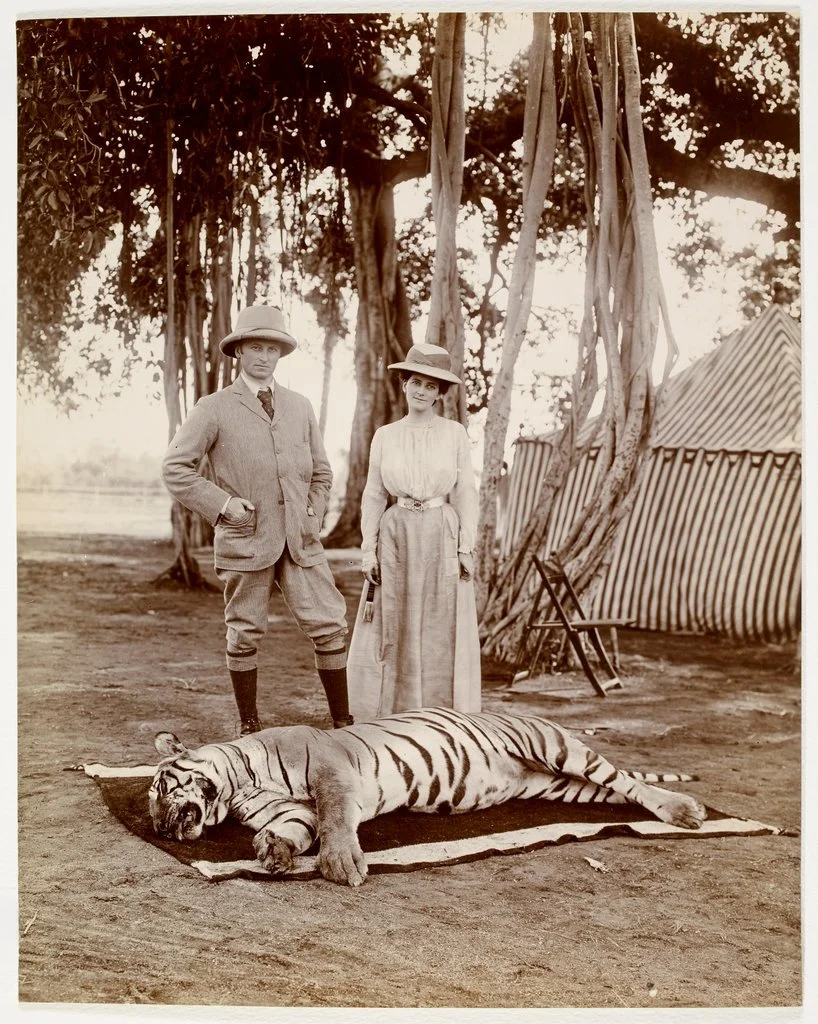
Image details:
Section tile (on previous page): Photo 157/(12), Duke of Connaught's visit to New Delhi (1921), British Library Archive
Right: Photo 556/3 (61), Lala Deen Dayal (1901), British Library Archive